Chronic stress alters milk composition in TPH2 heterozygous mice: implications for neurodevelopment
Article Sidebar
Main Article Content
Abstract
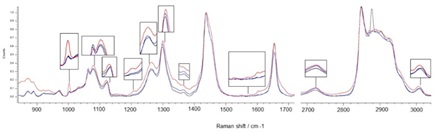
The relationship between cerebral neuroregulatory factors and breast milk composition remains poorly understood. Prolonged stress adversely affects both the maternal organism and milk quality. This study aimed to investigate changes in the milk chemical composition of mice predisposed to affective disorders (TPH2 heterozygous) under chronic stress conditions, compared to unstressed heterozygous and wild-type (WT) controls. C57BL/6 mice heterozygous for TPH2 (Het, n=5) were subjected to daily isolation stress from postpartum days 2 to 9; unstressed Het (n=5) and WT (n=5) mice served as controls. Milk samples were collected on day 10 and analyzed using Raman spectroscopy (785 nm wavelength). Milk from TPH2 Het mice lacked characteristic peaks of specific proteins and fatty acids but exhibited a higher fatty acid ratio than WT milk, indicating altered milk composition associated with changes in offspring nerve fiber myelination components. Stress exposure in TPH2 Het females increased the intensity of saturated fatty acid peaks in milk. These findings demonstrate altered milk nutritional composition in TPH2 Het females, with stress exposure revealing a compensatory mechanism affecting milk lipid profiles.
Article Details

This work is licensed under a Creative Commons Attribution 4.0 International License.