Identification of xylene and toluene in commercial matcha tea and their associated hepatorenal toxicity in wistar rats
Article Sidebar
Main Article Content
Abstract
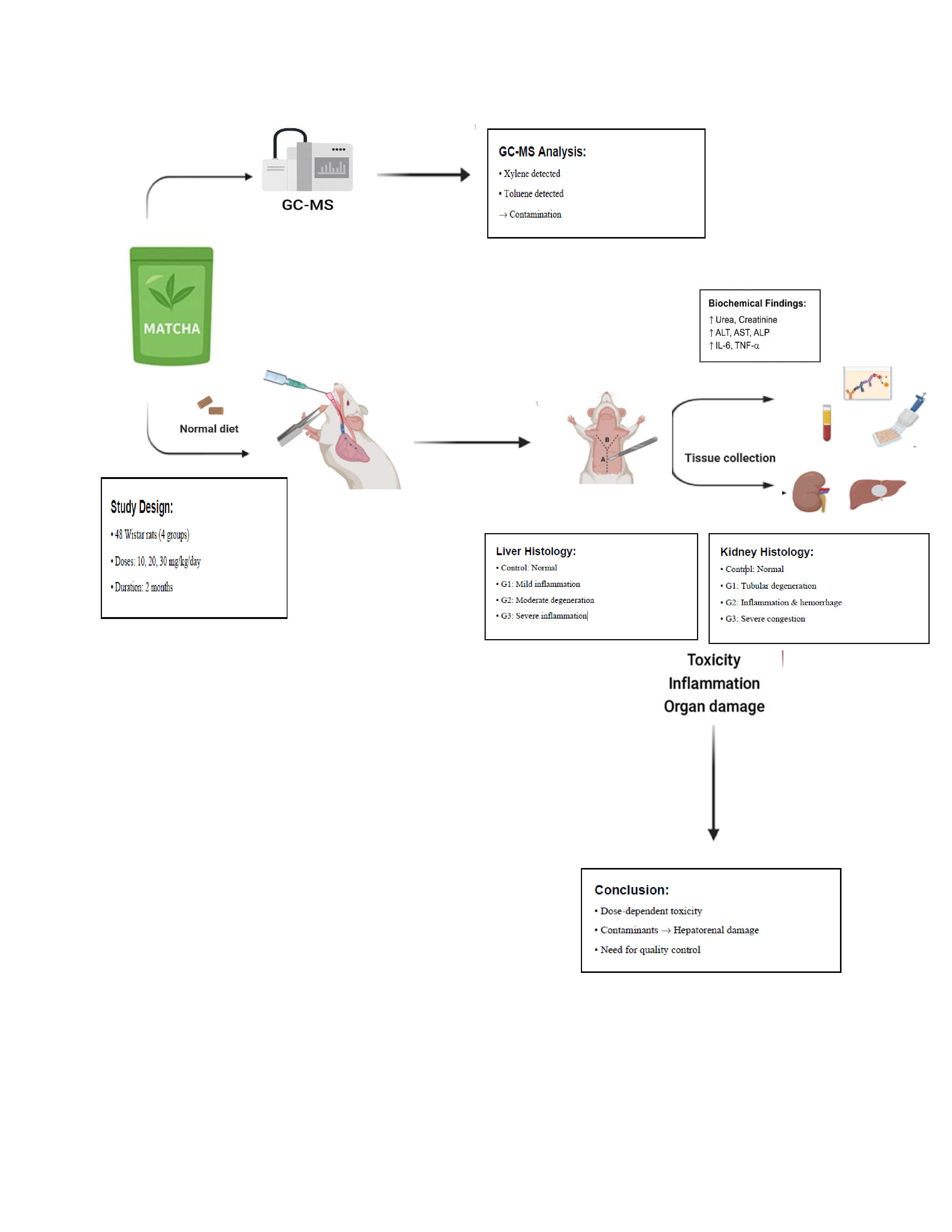
Matcha tea (Camellia sinensis), a fine-powder green tea, has become popular worldwide for its claimed antioxidant and weight loss effects. Nevertheless, safety and authenticity of commercial matcha products, especially those from local sources, remain poorly controlled. This study was aimed to investigate potential hepatotoxic and nephrotoxic effects of a locally marketed matcha in an animal model. Forty-eight male Wistar rats were randomly divided into 4 groups (n= 12): a control group and three matcha extract treatment groups of low, moderate, and high doses (10, 20, and 30 mg matcha/kg/day), by gavage for two months. Biochemical markers, including urea, creatinine, pro-inflammatory cytokines (interleukin-6 and tumor necrosis factor-alpha), hepatic enzymes (alanine aminotransferase (ALT), aspartate aminotransferase (AST), alkaline phosphatase), were determined. The matcha extracts were subjected to the analysis of their chemical compositions by gas chromatography-mass spectrometry (GC-MS). Liver and kidney histopathological examination was carried out using routine staining procedures. GC-MS analysis revealed the presence of toxic contaminants, including xylene and toluene, which are not naturally occurring constituents of authentic matcha. Biochemical results revealed dose-dependent increases in proinflammatory cytokines, hepatic enzymes, creatinine and urea were significantly higher (P < 0.01) in the treatment groups when compared to the control group. Histopathology demonstrated dose-related hepatic and renal degenerative and inflammatory changes. Overall, the local matcha product exhibited clear hepatotoxic, nephrotoxic, and pro-inflammatory effects, likely associated with chemical contamination or poor product quality. These results emphasize the importance of strict quality control and thorough safety assessment in commercialized matcha products for human health
Article Details

This work is licensed under a Creative Commons Attribution 4.0 International License.