Impact of deficit sprinkler irrigation scheduling on maize (Zea mays L.) crop coefficient and vegetative growth in coastal Syria
Article Sidebar
Main Article Content
Abstract
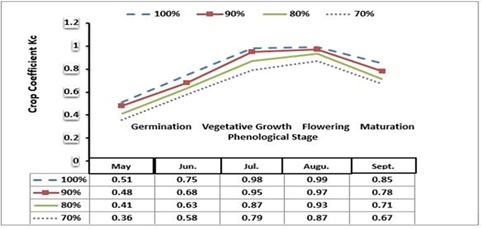
This study was conducted in the Jableh District, Latakia Governorate in northwestern Syria during the 2023-2024 irrigation seasons to evaluate the effect of deficit irrigation on the vegetative growth of maize (Zea mays L.) cultivar "Casper". A randomized complete block design (RCBD) was employed with four irrigation treatments representing 70%, 80%, 90%, and 100% of crop water requirement. The results revealed significant differences among irrigation treatments (p ≤ 0.05). The 80% irrigation level showed the most favorable effect on vegetative growth parameters. Significant increases were observed in leaf area (21.7%), leaf surface area (29.9%), and leaf area index (32.6%) compared to the control treatment (100%). These findings suggest that moderate deficit irrigation can improve water use efficiency while maintaining optimal plant growth under coastal Syrian conditions. These results demonstrate that moderate deficit irrigation (80%) enhances vegetative growth parameters while improving water use efficiency, indicating its potential as a sustainable irrigation strategy for maize cultivation under similar environmental conditions.
Article Details

This work is licensed under a Creative Commons Attribution 4.0 International License.