Antibacterial and molecular effects of povidone –iodine on pyocyanin-related gene expression in Pseudomonas aeruginosa
Article Sidebar
Main Article Content
Abstract
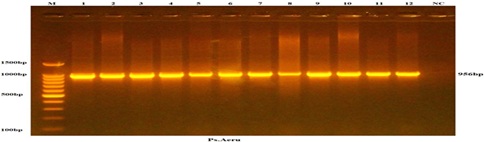
The objective of this study was to investigate the antibacterial and anti-pyocyanin effects of povidone–iodine against pseudomonas aeruginosa. Twelve isolates of P. aeruginosa were collected from wound samples and identified based on cetrmide agar and 16S rRNA gene analysis. PCR detection revealed that all isolates carried the PhzM, phzH, and phzS genes, which are responsible for pyocyanin pigment production. Pigment identification showed that showed that the isolates produced blue green pyocyanin pigment after 24, 48, and 72 hours of incubation. Two concentrations of povidone–iodine (4% and 10%) were tested for their inhibitory effects. The results indicated that povidone -iodines (4% and 10%)) inhibition of P. aeruginosa growth. RT-PCR analysis demonstrated that 4%and 10% povidone –iodine decresed the expression levels of PhzM, phzH, and phzS genes in the treated isolate (10), while increase the levels in the isolate (1). These findings suggest that povidone –iodine may influence pyocyanin-related gene expression in P. aeruginosa, although the response appears to be strain-dependent. Povidone–iodine exhibited significant antibacterial activity and influenced pyocyanin-related gene expression in P. aeruginosa. However, the molecular response differed between the tested isolates, suggesting that its effect on pyocyanin-associated virulence may be strain-specific.
Article Details

This work is licensed under a Creative Commons Attribution 4.0 International License.