GC-MS analysis and antibacterial activity of Vitex agnus-castus extracts against gram-negative bacteria isolated from burns and wounds
Article Sidebar
Main Article Content
Abstract
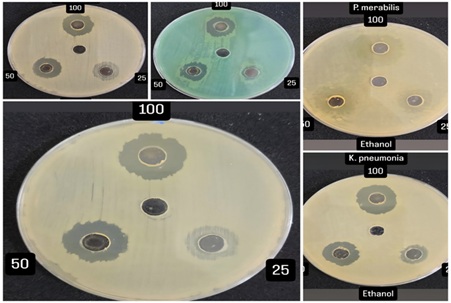
Antibiotic resistance is a major global health concern. It has become a major concern for the global scientific community, threatening the effectiveness of treatments and increasing the risk of stubborn infections. This challenge is attributed to the overuse of antibiotics and mismanagement of dosages, which accelerate the development of resistant bacterial strains. As a result, using natural chemicals is no longer just an option, but a necessity to reduce the damage caused by bacterial diseases that can be life-threatening due to their difficulty in treating them. This study aimed to isolate and identify bacteria associated with burn and wound infections. The sample included 50 purulent samples taken from patients at Baqubah Teaching Hospital during the period from the beginning of November 2024 to the end of December 2024. When tested for bacterial growth, 82% of the samples reported back positive, and 18% came back negative. Bacteria were identified from wound and burn swabs after microscopy and biochemical tests. We assessed the antibiotic sensitivity of these isolates using the disk diffusion method in accordance with the McFarland standards. The examination revealed that among the isolates, there were several multidrug-resistant (MDR) bacteria. Moreover, both ethanolic and methanolic extracts of the Vitex agnus-castus plant were prepared, and their antibacterial effectiveness was evaluated in a laboratory environment by quantifying the inhibition zone against clinical bacterial strains, including P. aeruginosa, K. pneumoniae, A. baumannii, E. coli, and P. mirabilis. Antibiotic sensitivity testing was conducted after the biochemical identification of bacteria isolated from 50 patients with burns and surgical wounds. Results indicated that both ethanolic and methanolic extracts exhibited bactericidal properties to some isolates; however, at concentrations of 50 and 100 mg/ml, the methanolic extract demonstrated greater efficacy. Furthermore, gas chromatography-mass spectrometry (GC-MS) was used to examine the active chemical components of the Vitex agnus-castus extracts.
Article Details

This work is licensed under a Creative Commons Attribution 4.0 International License.