Prevalence of plasmid –mediated quinolone resistance in clinical isolates of Klebsiella pneumoniae in Diyala province, Iraq
Article Sidebar
Main Article Content
Abstract
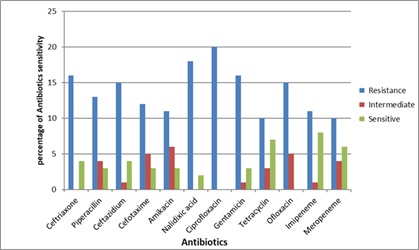
Klebsiella pneumoniae represents is a prominent opportunistic nosocomial pathogen involved in a wide range of healthcare-associated infections. Plasmid-mediated quinolone resistance (PMQR) has become a significant contributor to antimicrobial resistance, particularly among multidrug-resistant strains. Therefore, the present investigation aimed to characterize the distribution of PMQR- associated genes among extended-spectrum β-lactamase (ESBL)-producing K. pneumoniae isolates recovered from clinical specimens in Diyala Province, Iraq.Between October 2024 and February 2025, a total of 145 clinical samples including blood, urine, sputum, burns, and wounds swabs- were collected from hospitalized patients. Twenty isolates of K. pneumoniae were identified through standard microbiological procedures. Antimicrobial susceptibility testing and ESBL screening were performed using the disc diffusion method in combination with the combined disk technique. Subsequently, polymerase chain reaction (PCR) assays were conducted to detect ESBL- related genes as well as PMQR determinants among the K. pneumoniae isolates. Out of the 145 clinical specimens, 20 isolates of K. pneumoniae were identified (13.79 %). The isolates were obtained from blood (15%, 3/20), urine (25%,5/20), sputum (5%,1/20), burn swabs (25%,5/20), and wound specimens (30%,6/20). Antimicrobial sensitivity testing revealed the highest resistance rates to ciprofloxacin (100%) and nalidixic acid (90%). Of the 20 isolates,10(50%) was identified as ESBL producers. Among these ESBL-producing isolates, molecular analysis of PMQR genes showed that the aac (6′)-lb-cr was detected in 100% of isolates, whereas qnrB was found in 40%. In contrast, qnrA, aac (3′)-ll, and qnrC were not detected. The findings highlight the substantial contribution of plasmid-mediated quinolone resistance determinants to antimicrobial resistance among ESBL-producing K. pneumoniae isolates. These results underscore the necessity for strengthened antimicrobial stewardship programs and enhanced epidemiological surveillance strategies to mitigate the dissemination of resistant bacterial strains within healthcare environments.
Article Details

This work is licensed under a Creative Commons Attribution 4.0 International License.